Multi Channel Selling India, Amazon Seller India, Shopify India, Flipkart Seller, Ecommerce Management, Omnichannel Selling, Inventory Management,
Multi-Channel Selling in India: How to Manage Amazon + Shopify + Flipkart Without Chaos
Learn how to manage Amazon, Shopify, and Flipkart from one workflow. Discover the best strategies, tools, and inventory management tips for successful multi-channel selling in India.
July 10, 2026
Growth looks great until your dashboards start arguing with each other. Amazon says one thing, Shopify says another, Flipkart still shows old stock, and your team is stuck fixing yesterday's mistakes.
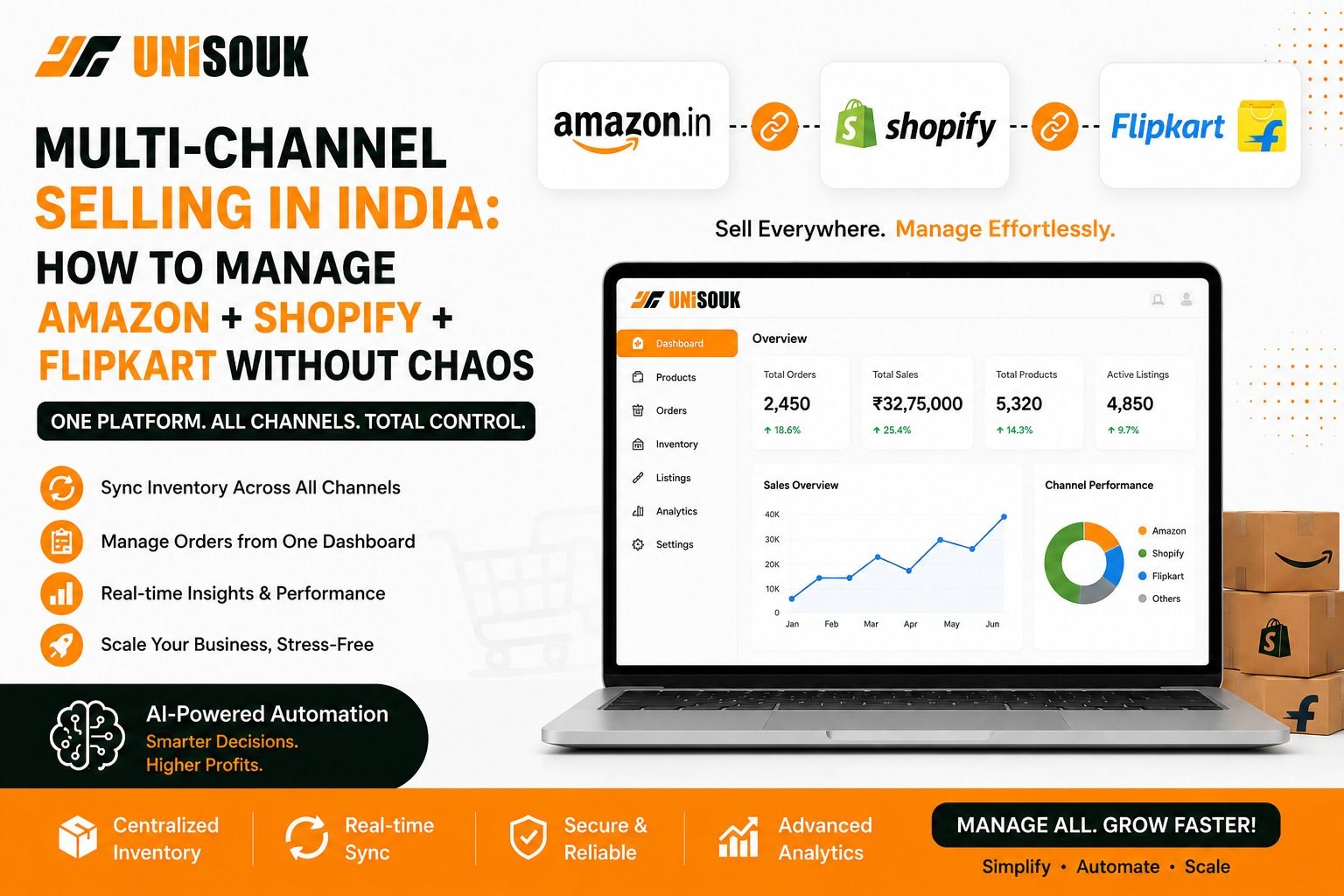
That's the real problem with multi-channel selling in India. More D2C brands are expanding because buyers now move between marketplaces, brand websites, WhatsApp, and social commerce. But more channels can also mean stock mismatches, order errors, scattered listings, and slower fulfillment. If you want wider reach without daily mess, UniSouk and a better system can help you run Amazon, Shopify, and Flipkart like one operation.
1. What multi-channel selling means in India
A simple definition you can use right away
Definition: Multi-channel selling means you sell the same products on more than one channel, such as Amazon, Shopify, and Flipkart, while keeping stock, orders, and product data aligned.
That sounds simple because it is simple. The hard part starts when one sale should update every other channel fast enough to stop overselling. So the job is not only selling in more places, it's keeping the same stock, the same catalog, and the same order flow across all of them.
Why Indian brands are moving beyond one sales channel
If you're growing in India in 2026, one storefront usually isn't enough. Buyers discover products on marketplaces, come back through Instagram, ask questions on WhatsApp, and expect fast delivery because quick-commerce habits have changed what "normal" feels like.
You also don't want your whole business tied to one platform's fees, traffic swings, or policy changes. A lot of demand is coming from tier-2 and tier-3 cities too, which makes wider channel coverage more useful. Multi-channel selling gives you more surface area, but only if you keep control.
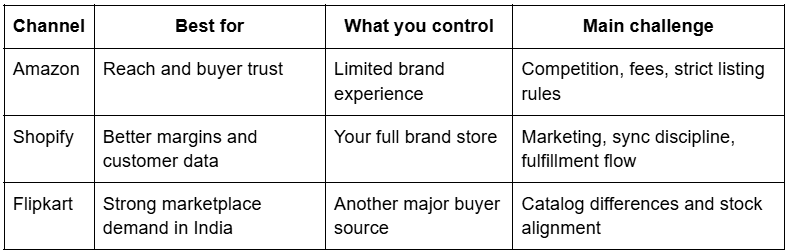
2. Amazon, Shopify, and Flipkart each do a different job
Before you fix operations, get clear on what each channel is actually doing for you.
Each one matters. The problem starts when you treat all three like copies of the same store.
Why Amazon is strong for reach, but tough to manage at scale
Amazon gives you traffic and fast buyer trust. That's a huge advantage when you want sales velocity.
But it also punishes sloppy operations. Wrong stock, listing issues, late shipment updates, and pricing mistakes get expensive fast.
Why Shopify gives you control, but still needs tight operations
Shopify is where you own the brand story, customer data, and repeat buying experience. It's also where your margins can look better because you control more of the funnel.
Still, Shopify doesn't magically fix backend work. If your store isn't tied into your inventory sync software and order flow, it becomes one more place where things can break.
Why Flipkart matters for wider market coverage in India
Flipkart is still a serious source of marketplace demand, especially when you want better coverage across Indian buyer segments. For many sellers, it's the channel that fills gaps Amazon doesn't.
It also adds more operational work. Catalog formats, pricing checks, and fulfillment rules can differ, so you need your base data clean before you expand there.
3. Where the chaos starts in multi-channel ecommerce
Most chaos doesn't come from growth itself. It comes from trying to run three sales channels with copy-paste work and crossed fingers.
Stock mismatches that lead to overselling and missed sales
You sell the last unit on Amazon, but Shopify and Flipkart still think it's available. Now you've oversold, delayed a shipment, or refunded a buyer you worked hard to win.
The opposite problem hurts too. If your stock isn't updated properly, you may mark products unavailable when you still had sellable inventory sitting there.
Order and shipping confusion that slows down fulfillment
When orders land in separate dashboards, your team starts checking tabs instead of packing orders. Spreadsheets, email handoffs, and manual label creation slow everything down.
Listing, pricing, and customer service issues that waste time
Updating titles, images, descriptions, and prices one channel at a time is a drain. So are returns and refund workflows that all live in different places.
You end up doing admin work all day, while customers wait longer for answers and your team misses bigger growth work.
4. How to manage inventory across Amazon, Shopify, and Flipkart without errors
If your stock control is weak, nothing else stays stable. Good multi-channel inventory management is boring in the best way. It keeps surprises out of your day.
A simple setup usually includes:
one master inventory source
real-time updates across channels
a small safety buffer for fast movers
Use real-time inventory sync so every channel sees the same stock
The rule is simple. When one item sells, stock should update everywhere fast enough to stop duplicate sales.
That is where a multichannel ecommerce platform or inventory sync software earns its keep. This India-specific guide to Flipkart, Shopify, and Amazon inventory sync shows why channel lag creates seller problems so quickly.
Keep a safety buffer for fast-moving products
A stock buffer gives you breathing room during festival sales, ad spikes, or sudden marketplace jumps. You don't need a huge reserve, you need a smart one.
Think of it like a guardrail. It protects you while the system catches up and while couriers, marketplaces, and humans do human things.
Use automation to replace spreadsheet-based stock tracking
Spreadsheets feel fine when order volume is low. Then one busy week hits, someone forgets an update, and your stock count turns into fiction.
Automation cuts that risk. Centralized ecommerce management keeps one source of truth alive, even when your order volume gets noisy.
5. How to keep listings, orders, and fulfillment under control
Inventory is only half the story. You also need clean ecommerce channel management, which means your catalog, order handling, and shipping workflow all move from one core system.
Keep product data consistent across every channel
Start with one clean product record for titles, images, descriptions, SKUs, and attributes. That record is your source of truth.
Yes, Amazon, Shopify, and Flipkart may each need small formatting changes. But the base product data should stay aligned, or your listings drift apart fast.
Centralize order handling so nothing gets lost
A single dashboard changes everything. Your team can see every order, every status, and every exception in one place instead of bouncing between tabs.
That is where marketplace management software, or a tool like UniSouk, becomes practical instead of theoretical. You cut missed orders, speed up processing, and keep team handoffs cleaner.
Automate fulfillment steps to cut delays and reduce mistakes
Packing slips, labels, manifests, and tracking updates should not depend on memory. The more of that flow you automate, the fewer shipment mistakes you create.
Better fulfillment also reduces support pressure. Fewer "where is my order?" messages means more time for real selling.
6. Why manual management stops growth, even when sales are rising
Manual work hides its cost at first. It feels cheap because you're not paying for better systems. You are paying, though, with time, errors, and slower decisions.
Spreadsheets break down when orders start stacking up
One growing Indian brand can manage a few daily orders in Excel. Then a sale event starts, returns increase, and two people edit the same file.
Now your stock is wrong, your orders are late, and nobody trusts the sheet anymore.
Your team spends more time fixing errors than selling
When updates live in inboxes and separate dashboards, your staff becomes a repair crew. They're not improving listings, planning promotions, or working on repeat customers.
That hidden cost is brutal. You're paying salaries to chase mistakes instead of revenue.
Peak season exposes every weak process you have
Festival campaigns and discount events don't create bad systems, they expose them. A tiny gap in your workflow turns into delayed dispatches, refund headaches, and bad reviews.
Even Amazon's Smart Commerce reel on manual inventory updates makes the point clearly, end-of-day Excel updates don't hold up once multi-channel selling gets busy.
7. What automation changes for multi-channel selling in India
Automation doesn't make your business perfect. It makes your business calmer, faster, and easier to trust.
Automated inventory and order syncing removes the daily scramble
When stock and orders sync automatically, you stop doing late-night fixes across three platforms. Your team sees the same numbers everywhere.
That is the basic promise of marketplace automation. Less chasing, fewer surprises, and much better control.
Automated reporting helps you see which channel is actually profitable
Revenue can fool you. Amazon fees, shipping, commissions, returns, taxes, and discounting can eat margins faster than you think.
A good multichannel ecommerce platform helps you compare channel performance in one view. UniSouk fits here because it helps centralize operations instead of leaving profit clues scattered across tools.
A short workflow example shows the difference automation makes
Without automation, an order comes in, someone checks stock manually, updates a sheet, logs into another channel, and then prints labels later. One delay creates three more.
With automation, the order lands, stock updates everywhere, fulfillment tasks trigger faster, and tracking moves out without extra chasing. That's how UniSouk helps turn multi-channel selling into a system instead of a scramble.
FAQ
What is multi-channel selling?
It means you sell on more than one channel at the same time, such as Amazon, Shopify, and Flipkart, while keeping inventory, listings, and orders connected.
What are the benefits of multi-channel selling for Indian brands?
You reach more buyers, reduce dependence on one platform, improve brand visibility, and create more revenue paths across marketplaces and your own store.
How do you manage inventory across Amazon, Shopify, and Flipkart?
Use real-time inventory sync, keep one stock source, add safety buffers for fast-moving items, and stop relying on manual spreadsheet updates.
What software is best for multi-channel selling?
The best fit is software that combines inventory sync, listing control, multi-channel order management, and fulfillment automation in one place.
Is multi-channel selling better than omnichannel selling?
They solve different problems. Multi-channel selling is about selling in more places. Omnichannel is about making the customer experience feel connected across those places.
How does UniSouk help with multi-channel selling?
UniSouk helps you centralize listings, sync stock, manage orders, and reduce repetitive work across Amazon, Shopify, and Flipkart.
Grow with control, not crossed fingers
Multi-channel selling works when you build control before you chase scale. Real-time stock sync, centralized order management, and automation are what keep growth from turning into cleanup work.
If Amazon, Shopify, and Flipkart currently feel like three separate businesses, that's fixable. With a better operating system, and tools like UniSouk, you can run multi-channel selling with a lot more confidence and a lot less chaos.