AI eCommerce, AI Automation, Ecommerce Analytics, Smart Inventory, Ecommerce Automation, AI Inventory Management, UniSouk
How AI Ecommerce Is Changing Operations in India
Discover how AI ecommerce solutions are transforming online businesses in India through AI automation, ecommerce analytics, smart inventory, and personalized customer experiences.
July 22, 2026
Indian eCommerce is growing fast, but daily operations can get messy even faster. If you sell on Amazon, Flipkart, Shopify, ONDC, or your own D2C site, you may deal with stockouts, slow order processing, changing demand, manual listings, and rising support costs.
AI ecommerce gives you a practical way to handle that pressure. It uses machine learning, predictive analytics, and real-time data to reduce repetitive work and help you make better decisions. Platforms such as UniSouk bring several seller workflows into one place.
You don't need to replace your team or automate everything overnight. You need to find the tasks that waste the most time, then improve them step by step.
What AI Ecommerce Means for Your Online Business
What is AI ecommerce? It is the use of artificial intelligence to improve online selling tasks, decisions, and customer experiences. It studies your sales, product, customer, order, and stock data to suggest an action or complete routine work.
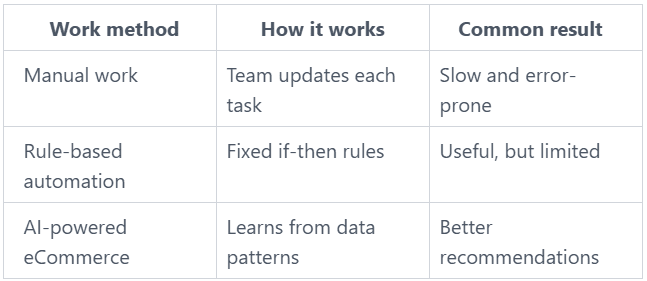
Traditional automation follows fixed rules. AI ecommerce can identify patterns, adjust recommendations, and improve as you feed it cleaner data.
How AI Works in Indian Online Retail
The process is simple. You collect clean business data, AI finds patterns, makes a prediction, and either triggers an action or asks for approval.
It can forecast festival demand, flag an unusual return pattern, or draft a product title from catalog details. You should still review pricing, compliance, and customer communication before changes go live.
Why Indian Sellers Need More Than Basic Automation
You may sell across regions with different demand patterns, delivery zones, languages, COD orders, and festival peaks. You also face changing marketplace rules and constant price competition.
Basic automation follows the same rule each time. AI can respond when your sales, stock, or return data changes.
Why AI Ecommerce Is Transforming eCommerce Operations in India
Customers expect accurate listings, quick replies, reliable delivery updates, and relevant offers. At the same time, fulfillment costs rise while sellers manage more channels and SKUs.
AI ecommerce helps you grow without adding the same amount of manual work. Small and medium sellers can begin with one issue, such as inventory alerts or listing creation, then expand when the process works.
AI works best when your product, stock, order, and customer data is accurate and consistently updated.
Rising Customer Expectations and Marketplace Competition
A buyer won't wait long for a delivery answer or search through unclear product details. AI support tools can answer common questions, while recommendation engines can show relevant products.
Shopify merchants can also use tools such as Shopify Magic and Shopify Inbox for content and customer conversations.
The Cost of Manual Multi-Channel Selling
Copying listings, updating stock, reconciling orders, and tracking returns across channels creates avoidable errors. AI marketplace automation reduces repetitive work, but your team should keep control of exceptions and major decisions.
The Biggest AI Ecommerce Use Cases for Indian Sellers
These are the areas where AI ecommerce can make daily seller operations more manageable.
1. Smart Inventory and AI Demand Forecasting
Smart inventory uses sales history, seasonality, promotions, location, and stock movement to estimate future demand. AI demand forecasting can flag low stock, slow-moving items, and possible overstock before they become expensive problems.
Forecasts improve when your SKU names, sales history, and stock counts are clean. A connected inventory and order management system can also give you a clearer view of stock and fulfillment work.
2. AI Automation for Orders, Returns, and Fulfillment
AI order management can route orders, check COD-related risks, send shipping updates, and flag failed deliveries. It can also classify returns and alert your team when an order looks delayed or unusual.
This helps you find exceptions sooner. Don't let automation approve every return or cancel every order without review.
3. AI Product Listings, Recommendations, and Support
AI product listings can draft titles, descriptions, attributes, keywords, and image guidance from your catalog details. A product listing automation tool can reduce repeated catalog work across marketplace channels.
AI product recommendations can use browsing and purchase behavior to suggest relevant items. Support tools can answer questions about sizing, availability, delivery, and returns. Review all claims, regulated products, and local-language copy before publishing.
4. Dynamic Pricing, Fraud Detection, and Business Insights
Dynamic pricing tools can consider demand, stock levels, promotions, and competitor signals before suggesting a price. You still need fair rules and human approval, especially when margins are thin.
Fraud detection can flag unusual payment activity, suspicious orders, fake returns, or account behavior. Ecommerce analytics, retail analytics, and business intelligence help you spot profitable products, weak channels, and recurring delays.
5. AI Marketplace Automation Across Sales Channels
An AI ecommerce platform can centralize catalog, inventory, orders, and performance data for multi-channel selling. An Amazon seller can sync stock, a Shopify merchant can expand to marketplaces, and a D2C brand can manage its site alongside Flipkart or ONDC.
Check integrations, channel rules, and data quality before you choose a platform. A tool is only useful if it fits your current workflow.
What You Gain From AI-Powered Operations
When AI supports the right tasks, you can process work faster, reduce manual errors, improve stock planning, and respond to customers sooner. Results still depend on implementation, data quality, team adoption, and your business model.
How AI Helps You Scale Without Losing Control
AI can handle volume while your team handles supplier relationships, strategy, creative work, and sensitive customer issues. Start with one measurable goal, such as reducing listing time, stockouts, or response time.
Real-World AI Ecommerce Examples in India
These are practical use cases, not verified case studies.
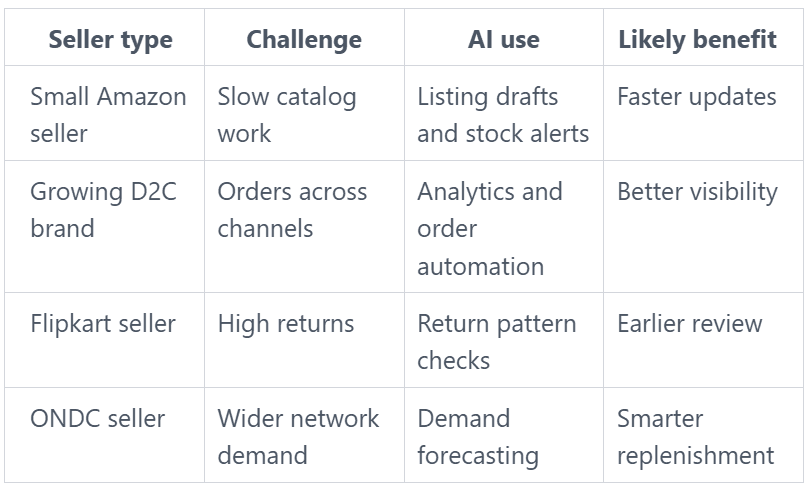
A small business may start with listing automation and inventory alerts. A growing brand may add ecommerce analytics and multi-channel order automation once its data is reliable.
How UniSouk Brings eCommerce Tasks Together
UniSouk can help you bring catalog, inventory, order, analytics, and marketplace work into a more unified system. That matters when disconnected tools create duplicate updates and unclear ownership.
You can reduce the need to jump between spreadsheets, seller panels, and separate workflows. Still, confirm the current features, integrations, pricing, and support options before you choose any platform.
Automating Listings and Catalog Work
Listing automation can prepare consistent product information for multiple channels. Check category rules, required attributes, images, and product facts before publishing.
Managing Inventory, Orders, and Multiple Channels
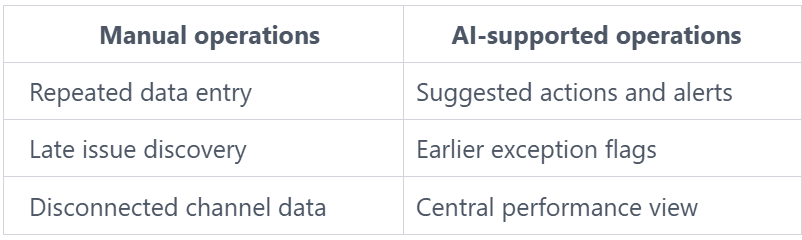
A central workflow can give you better stock visibility and help you spot delayed orders or inventory exceptions earlier. It also helps your team work from the same operational view.
How to Choose the Right AI Ecommerce Platform
Compare AI capabilities, inventory management, order management, listing tools, analytics, security, permissions, reporting, and marketplace integrations. Test one workflow with real catalog and order data before you commit.
You may evaluate UniSouk alongside other options if you need a more connected seller workflow. Ask whether you can approve AI changes, export your data, audit recommendations, and scale as your business grows.
Questions to Ask Before You Buy
How long will setup take with your current catalog?
Which channels, SKU volumes, and automation rules are supported?
Can your team review or reverse AI-generated changes?
Is API access available for your existing systems?
What are the data privacy, pricing, support, and contract terms?
Ask for a product demo and a clear explanation of what the AI can and cannot do.
Common Adoption Mistakes to Avoid
Don't start with poor data or automate too much at once. Avoid ignoring marketplace policies, skipping staff training, tracking vanity metrics, or publishing AI-generated content without fact checks.
Use a phased rollout with one success metric and regular reviews.
What the Future Holds for AI Ecommerce in India
The next phase includes generative AI for catalogs and support, predictive analytics, multilingual commerce, seller assistants, and intelligent supply chains. More workflows will run automatically, but approval steps will still matter.
AI ecommerce isn't about removing people from operations. It's about helping you make faster decisions while protecting accountability, privacy, and customer trust.
Frequently Asked Questions About AI Ecommerce
What Is AI Ecommerce?
AI ecommerce uses artificial intelligence and machine learning to improve online selling tasks. It can support forecasting, listings, recommendations, customer support, and automation.
How Does AI Automation Improve eCommerce Operations?
AI automation reduces repetitive work and identifies patterns in business data. Your team can act faster, but unusual or sensitive decisions still need human review.
What Is Smart Inventory Management?
Smart inventory uses sales and stock data to guide reorder timing, demand forecasts, and overstock control. It helps you see stock risks before they affect sales.
How Can Ecommerce Analytics Help You Grow?
Ecommerce analytics shows sales, margins, returns, customer behavior, channel performance, and operational delays. You can use those insights to make better product and channel decisions.
Why Should You Evaluate UniSouk for AI-Powered eCommerce Management?
You may consider UniSouk if you want listing, inventory, order, analytics, and marketplace workflows in one system. Confirm its current features, integrations, pricing, and support against your needs.
Is AI Affordable for Small and Medium eCommerce Businesses?
Affordability depends on your catalog size, channel count, tool choice, and automation depth. Start with one high-value workflow and compare the cost with time saved and fewer errors.
Conclusion
AI ecommerce can help you manage inventory, orders, listings, pricing, support, analytics, and marketplace growth with less manual effort. You don't need to automate every task at once.
Drag
Choose one measurable problem, check your data, test a workflow, and review the results with your team. Explore UniSouk's AI-powered eCommerce platform to see whether it fits your channels, catalog, and growth plans.